
Ever thought about what dictates your car’s performance, how much you spend at the pump, and even how long your tires last? While many factors come into play, one often overlooked yet crucial element is tire pressure. It’s not just about keeping your tires round; it’s a cornerstone of safe driving, optimal fuel efficiency, and significantly extending the lifespan of your tires. Many drivers are unaware of the profound impact proper tire inflation has, leading to potential safety risks and unnecessary expenses.
Ignoring your tire pressure is akin to ignoring a vital sign for your vehicle. Just a few PSI (pounds per square inch) difference can have cascading effects, from your car handling less predictably to your wallet feeling lighter due to increased fuel consumption. Fortunately, understanding and maintaining correct tire pressure is a straightforward process that offers a wealth of benefits. This article will delve into why tire pressure is so critical, covering everything from how it impacts your drive to practical tips for keeping it in check.
Understanding the PSI: What is Tire Pressure?
At its core, tire pressure refers to the amount of air pushed inside your vehicle’s tires. This air acts as the primary support for your vehicle’s weight, cushioning the ride and providing the necessary grip on the road. The recommended tire pressure for your specific vehicle is not a one-size-fits-all figure. It’s meticulously determined by the automotive manufacturer to ensure optimal performance, handling, and safety for that particular car model.
This recommended pressure is typically found in a few key locations: on a sticker inside the driver’s side door jamb, in the glove compartment, or within your vehicle’s owner’s manual. It’s crucial to distinguish this recommended pressure from the maximum pressure listed on the sidewall of the tire itself. The sidewall pressure indicates the maximum air the tire can safely hold, not the ideal operating pressure for your vehicle.
The Fuel Efficiency Connection: Making Every Drop Count
One of the most significant and immediate benefits of maintaining optimal tire pressure is its direct impact on fuel efficiency. When tires are underinflated, they increase the contact patch with the road surface. This creates more friction, forcing your engine to work harder to move the vehicle forward. Imagine trying to push a heavy object across a rough surface versus a smooth one – the difference in effort is substantial.
Underinflated tires also lead to increased rolling resistance. This means more energy is wasted as heat and deformation of the tire, rather than being efficiently transferred into forward motion. Consequently, your engine consumes more fuel to achieve the same speed. Studies have shown that even a slight underinflation of just 10% can decrease fuel economy by up to 3-5%. In the long run, this translates to more frequent trips to the gas station and a higher fuel bill. Regular checks and adjustments are a simple, cost-effective way to ensure you’re getting the most miles per gallon.
Safety First: A Matter of Grip and Control
Proper tire pressure is paramount for vehicle safety. Correctly inflated tires provide the intended contact patch with the road, ensuring optimal traction and braking performance. When tires are underinflated, the contact patch becomes irregular and larger, leading to reduced grip, especially during cornering and sudden maneuvers. This can significantly compromise your ability to control the vehicle in emergency situations.
Conversely, overinflated tires reduce the contact patch, making the tire more rigid and less able to conform to the road surface. This also diminishes grip and can lead to a harsher ride. Furthermore, incorrect tire pressure can affect your vehicle’s steering response, making it feel vague or overly sensitive. The risk of a blowout is also increased with improper inflation; underinflated tires generate excessive heat due to increased flexing, which can damage the tire’s internal structure and lead to a sudden failure.
Extending Tire Life: Getting More Miles for Your Money
Your tires represent a significant investment, and maintaining the correct pressure is key to maximizing their lifespan. Extended tire life is a direct consequence of even tire wear, which is facilitated by proper inflation. When tires are correctly inflated, they wear more evenly across the tread.
Underinflated tires tend to wear more on the outer edges, while overinflated tires wear more in the center of the tread. This uneven wear pattern not only reduces the overall mileage you can get from your tires but also compromises their performance and safety long before they reach their theoretical end of life. By regularly checking and adjusting your tire pressure, you ensure that the wear is distributed evenly, allowing you to enjoy the full intended life of your tires and delaying the need for costly replacements.
How to Check and Maintain Tire Pressure
Checking your tire pressure is a simple process that requires minimal tools. You’ll need a reliable tire pressure gauge. These are readily available at auto parts stores, gas stations, and even online. Digital gauges are often preferred for their accuracy and ease of reading, but many serviceable analog gauges are also available.
Here’s a step-by-step guide to checking your tire pressure:
- Find your recommended PSI: As mentioned earlier, this can be found on the sticker inside the driver’s side door jamb, in your glove compartment, or in your owner’s manual.
- Check when tires are cold: It’s best to check your tire pressure when the vehicle has been parked for at least three hours or has been driven less than a mile at moderate speeds. Friction from driving heats up the air inside the tires, causing it to expand and resulting in a higher pressure reading.
- Remove the valve cap: Unscrew the small cap from the tire’s valve stem.
- Insert the gauge: Firmly press the tire pressure gauge onto the valve stem. You might hear a slight hiss of air, which is normal.
- Read the pressure: Note the PSI reading on your gauge.
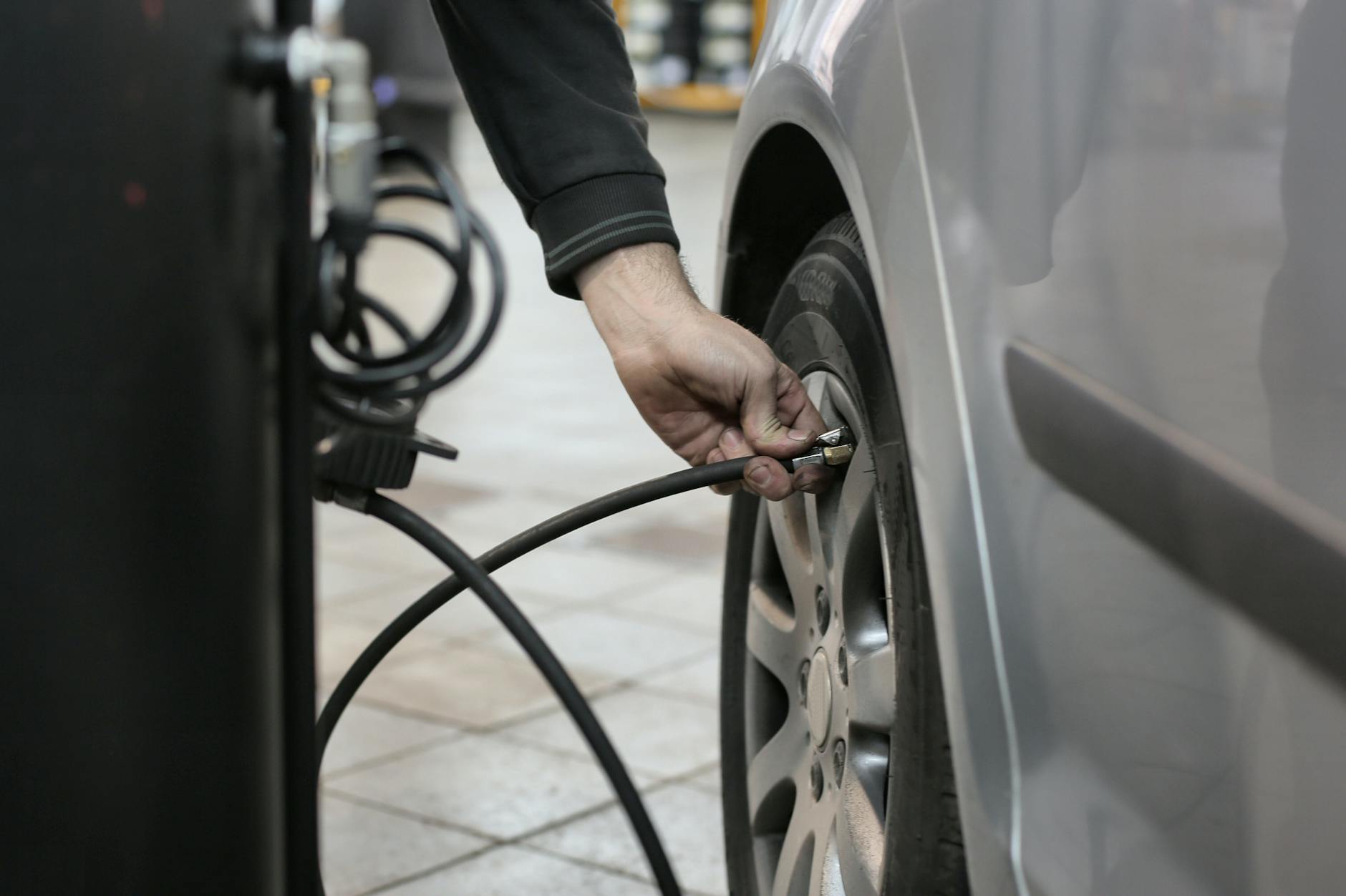
- Adjust as needed: If the pressure is too low, use an air compressor (available at most gas stations) to add air. If the pressure is too high, press the small pin in the center of the valve stem with the tip of the gauge or a small tool to release air in short bursts until the correct pressure is reached.
- Replace the valve cap: Screw the valve cap back onto the stem to prevent dirt and moisture from entering.
- Check all tires: Don’t forget to check the spare tire as well, as it’s essential in case of an emergency.
It’s recommended to check your tire pressure at least once a month and before long trips. Temperature fluctuations can also significantly impact tire pressure; for every 10°F (5.5°C) change in ambient temperature, tire pressure typically changes by about 1 PSI.
Conclusion: A Small Effort for Big Rewards
Maintaining the correct tire pressure is a small, routine task that yields significant benefits for your vehicle and your driving experience. From achieving better fuel efficiency and saving money at the pump to enhancing your vehicle’s safety and extending the life of your tires, the advantages are undeniable. Don’t let proper tire maintenance be an afterthought. Make it a priority, and you’ll enjoy a smoother, safer, and more economical drive.
Take action today! Grab a reliable tire pressure gauge, locate your vehicle’s recommended PSI, and check your tires. It’s a simple step that can make a world of difference. Your car, your wallet, and your peace of mind will thank you.